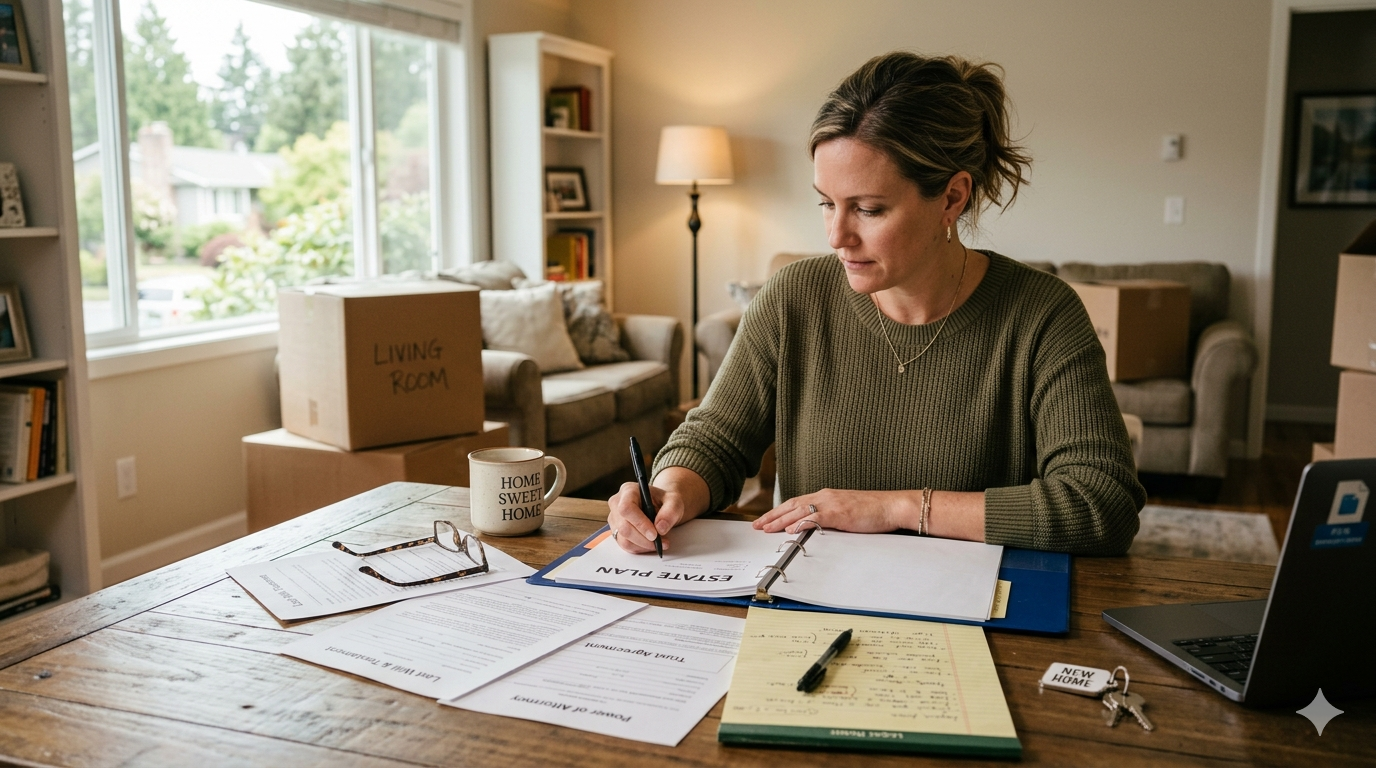
Closing on a new home is exciting, but it changes your estate significantly. A property that did not exist in the original plan now represents your single largest asset.
This gap between what documents say and what you own can lead to unintended outcomes. The sections below cover which documents to review, how property title affects inheritance, and common mistakes.
Why Buying a Home Triggers an Estate Plan Update
A home is often the single largest asset a person owns. Acquiring one changes the composition of an estate significantly.
When documents were created before a home purchase, they do not account for this new property. The result is a gap between what the documents say and what the person actually owns.
A will is a legal document that states who receives your assets after death and names an executor to carry out those instructions. If drafted before the home purchase, a will likely makes no mention of the property. This omission can lead to confusion, delays, or unintended outcomes.
Beyond the will itself, other documents in an estate plan may also be affected. Powers of attorney, beneficiary designations, and property title all affect what happens to a home after death. Reviewing all documents after closing ensures they work together.
When to Update Your Estate Planning Documents After Buying a Home
Update estate planning documents within 30 to 60 days of closing. Waiting longer creates a gap where documents do not match assets.
This applies to first homes, upgrades, vacation properties, or investments. Each new property represents a meaningful addition to an estate. The sooner documents reflect this change, the better protected the family.
Which Documents to Review After Buying a Home
Several documents may require attention after a home purchase. Together they show how assets will be managed and distributed.
Last Will and Testament
The will is the primary document that dictates who inherits the home. If you want a specific person to receive the property, use a specific bequest. A specific bequest names a particular person as the recipient.
If not mentioned specifically, it falls into the residuary estate. The residuary estate covers all assets not assigned to beneficiaries. This may or may not align with your intentions.
Power of Attorney
A power of attorney authorizes an agent to handle financial or legal matters on your behalf. The agent may need to pay taxes, manage payments, or sell the home if you become incapacitated.
If drafted before the home purchase, it may not grant authority over real estate transactions. Updating this document ensures the agent can act effectively.
Beneficiary Designations and Property Title
How ownership is recorded on the deed can override what a will says. If spouses own a home as joint tenants, it passes automatically to the survivor.
Review the title and beneficiary designations to ensure documents work together.
Affidavit of Execution and Witness Records
Will updates require proper witnessing and execution to be valid. An affidavit of execution confirms the will was signed correctly. Without it, a will could be challenged or deemed invalid.
How Your Property Title Affects What Your Will Should Say
How a home is titled affects inheritance directly. Understanding title types helps coordinate your will with ownership.
| Title Type | What Happens at Death |
| Joint Tenancy with Right of Survivorship | Property passes automatically to surviving owner |
| Tenants in Common | Your share passes through your will |
| Sole Ownership | Entire property passes through your will |
Joint Tenancy With Right of Survivorship
When owners hold property as joint tenants, it automatically transfers to the survivor. The will does not control this. It happens by operation of law.
Tenants in Common
When owners hold property as tenants in common, each share is separate. Your will determines who receives your portion. This is common among partners, siblings, or couples wanting different heirs.
Sole Ownership
When a home is owned solely, the entire property becomes part of the estate. Your will controls who inherits it.
If there is no valid will, intestacy laws apply. Intestacy laws dictate distribution when someone dies without a will.
How a New Home Impacts Probate and Your Heirs
Probate is the court process for validating a will and distributing assets. Real estate often goes through probate unless title passes automatically.
Probate can be time-consuming and expensive. Heirs may be unable to sell, refinance, or live in the property without approval. The process can take months or years, depending on complexity and disputes.
Understanding how probate affects real estate is important for families.
What Happens If You Do Not Update Your Will After Buying a Home
Failing to update a will can lead to unintended consequences. Common outcomes include:
- Intestacy rules apply: If the will does not cover the property, state or provincial laws decide who inherits
- Outdated beneficiaries: An ex-spouse or estranged relative may have claims
- Executor confusion: The executor may not know your wishes, causing delays or disputes
Each outcome is avoidable with a straightforward update.
What to Do If You Bought a Home in a New State or Province
Moving across state or provincial lines adds complexity. A will valid in one jurisdiction may not comply in another.
Some states have specific rules about will execution or witnessing. Others have different property and inheritance laws. If you relocated, review documents to ensure they remain enforceable.
Online platforms like Succession Wills support U.S. and Canadian residents.
How Often You Should Review Your Estate Plan Going Forward
Review your estate plan every three to five years. Certain life events call for an earlier review:
- Marriage or divorce
- Birth of a child or grandchild
- Significant change in assets or debts
- Moving to a new state or province
- Death of a named beneficiary or executor
Succession Wills stores your documents in a secure online vault. Keeping your plan current does not require starting over.
Common Mistakes Homeowners Make When Updating Their Will
Homeowners sometimes overlook important details when updating plans. Common pitfalls are worth noting.
Forgetting to Update the Power of Attorney
A new home means new financial responsibilities. If it does not cover real estate, the agent may face obstacles. This creates problems during a health crisis or absence.
Leaving Out a Specific Bequest for the New Property
Without naming the home specifically, it falls into the residuary estate. This may not be a problem if that is your intent. If you want a specific person to inherit, use a specific bequest.
Ignoring Mortgage and Debt Obligations
Heirs may inherit the mortgage along with the property. If the will does not address the debt, it can create financial strain.
Failing to Inform Your Executor
The executor manages the estate, including the home. Tell the executor about the property and where to find documents.
Keep Your Estate Plan Current After Buying a Home
Buying a home calls for a review of estate planning documents. Your will, power of attorney, and title determine what happens to the home. Taking action after closing ensures the property passes as intended.
Online tools make keeping your plan current simple.
Ready to Create Your Will?
Create or update your estate plan online without appointments or paperwork. Your documents stay accessible in your secure vault.
FAQs About Updating Your Will After Buying a Home
Do I need a new will or just a codicil after buying a home?
A codicil is a formal amendment to an existing will. Many people find it simpler to create an updated will instead. Updating a full will is often faster and ensures consistency.
Does my mortgage get passed on to my heirs?
Yes. If heirs inherit a home, they typically inherit the mortgage.
They can assume payments, refinance, or sell the home. The will can address mortgage payments, though this is optional.
Do I need to mention my new home specifically in my will?
Not always. A residuary clause covers all assets not otherwise mentioned. If you want a specific person to inherit, use a specific bequest.
Can I update my will online without a lawyer?
Yes. Online platforms can produce legally valid wills. The will requires printing, signing, and witnessing to be enforceable. Execution is equally important as the document.
Does buying a second home or vacation property require an update?
Yes. Any new real estate deserves attention in your estate plan. Each property is distributed by your will or intestacy laws.